
1. Overview of the issue of GB
The issue of Gilgit Baltistan is decades old now. The inception of Gilgit Baltistan as a result of Gilgit revolution led by local leaders and through the strategies of Major Brown came into shape on 1st November 1947. Gilgit as a separate independent entity lasted barely 16 days. A wireless message was sent to show the willingness of people of Gilgit to accede to the federation of Pakistan. Afterwards a political Agent Sardar Muhammad Aslam was appointed to administer the region.
Earlier in history the British had sold Kashmir to Gulab Singh through the treaty of Amritsar which came to be effective on 16th of March 1846[i]. Gilgit Baltistan being the part of Kashmir remained a disputed territory between the two nuclear armed countries Pakistan and India. Moreover, this status of Gilgit Baltistan sparked ripples of unrest in the region time and again. This case study will evaluate the poor governance and ambiguous status of the region which is threatening the delicate fabric of peace in a highly volatile and religiously diverse region.
This case study shall explore the various factors that are contributing to the unending plights of the people and the threats to the peace of Gilgit Baltistan. It will also discuss that the volatile situation of the region is due to its ambiguous legal status that spans over more than seven decades. This case study will analyze the geographical and legal aspects that are contributing to the dwindling peace thread of the region. Furthermore, it is impertinent to implore the evolution of key legal documents through the decades that exclusively effected the lives of the people of Gilgit Baltistan.
2. Introduction
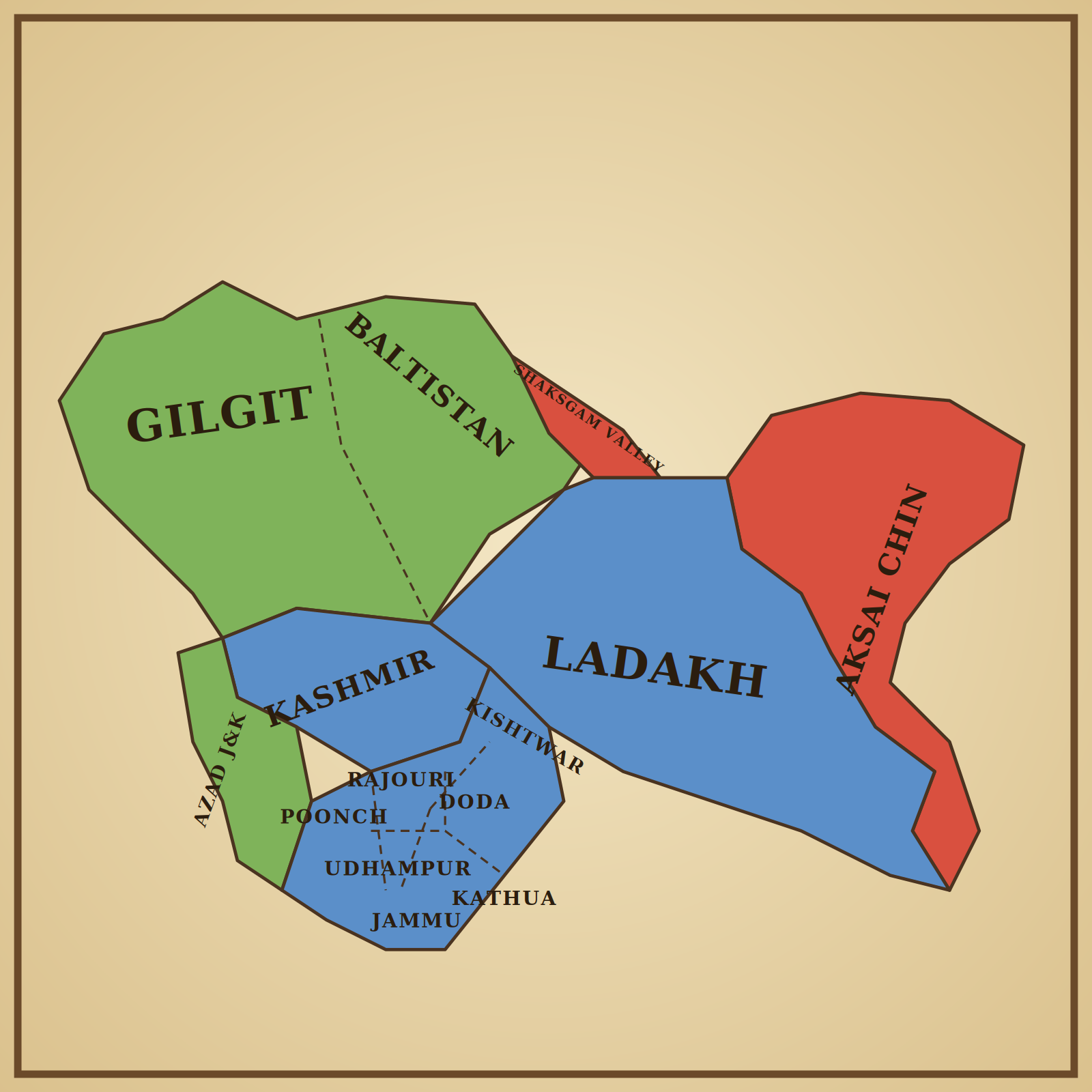
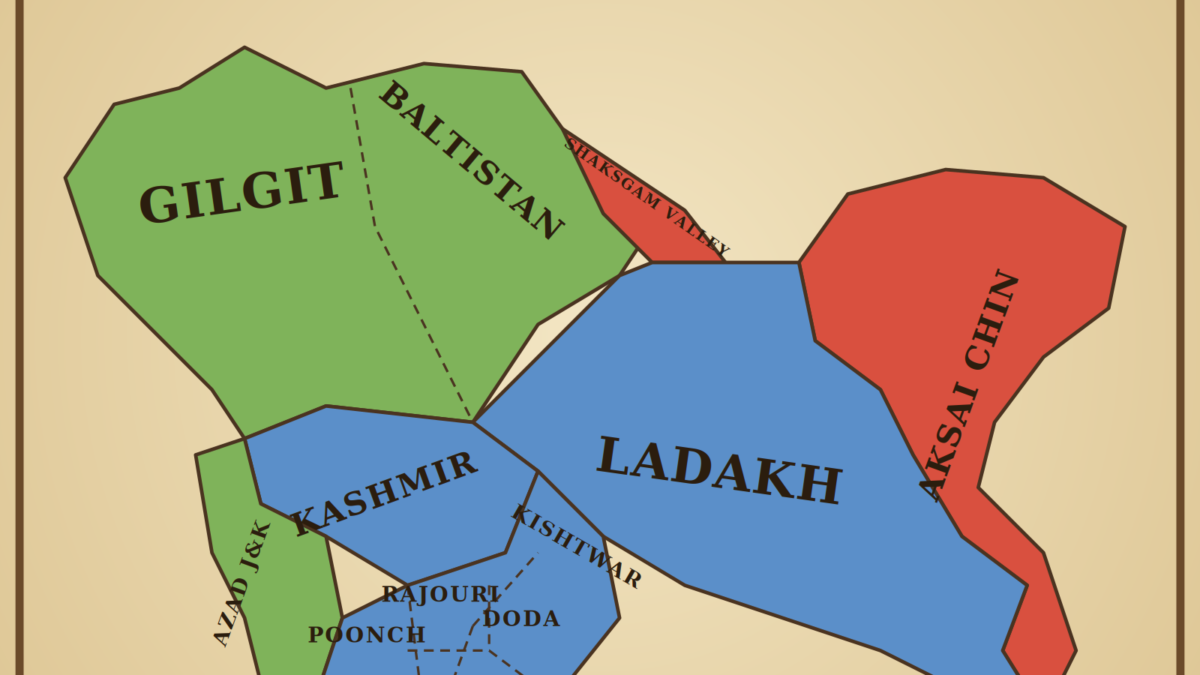
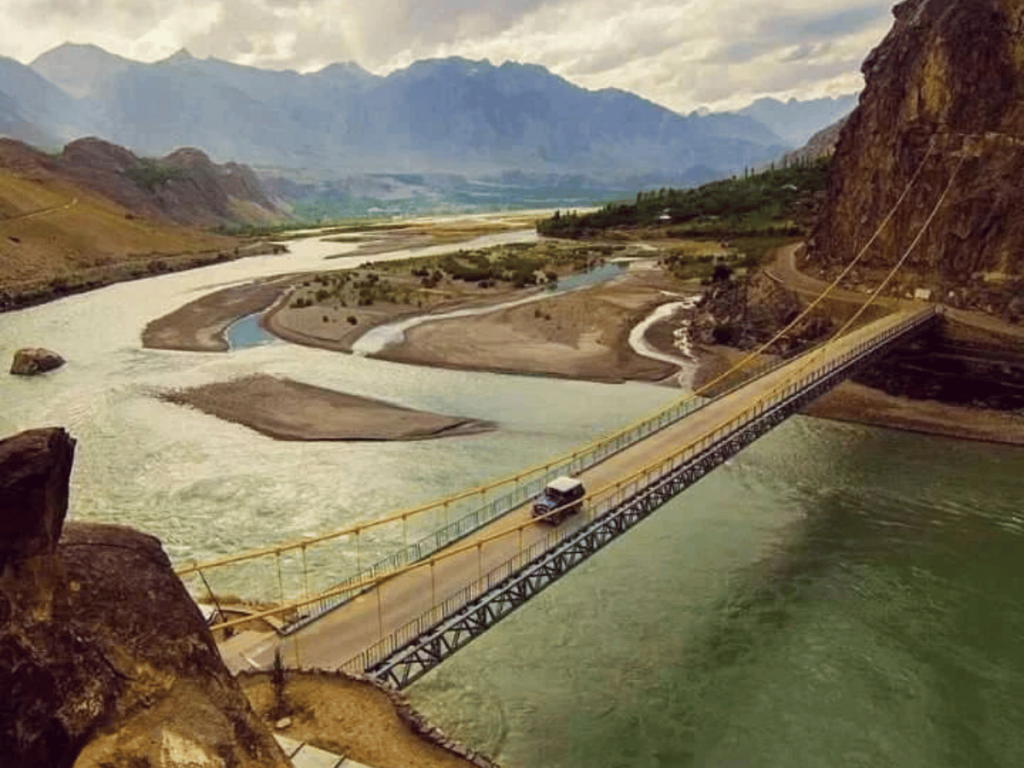
To call the region of Gilgit Baltistan a piece of wonder existing on the face of the Earth wouldn’t be exaggeration. It is the land which connects the Islamic Republic of Pakistan to the trade giant China. Previously known as FANA (Federally Administered Tribal Areas) which consisted of Gilgit Agency, Gilgit Wazarat, Astor Wazarat, Ladakh Wazarat, Hunza and Nagar states, and Skardu. Gilgit Baltistan also borders Afghanistan on the northwest through Wakhan Corridor. In the Northeast it connects with the Xinjiang Valley of China, and toward the south and southeast its borders with AJK and Pakistan’s Khyber Pakhtunkhwa. Historically Gilgit Agency was viewed as a frontier by the British to tackle the Russian Empire. Due to its geostrategic location and vast area Gilgit Baltistan has remained significantly vital for the powers including US, Britain, Russia, and China.
There was no instrument of accession signed by Gilgit Baltistan to be a part of Pakistan. This is how the controversial status of Gilgit Baltistan started to emerge. There is not a single article in the constitution of Pakistan to decide the fate of Gilgit Baltistan. Unfortunately, Gilgit Baltistan was ruled through the notorious FCR for many decades and later through half-baked Orders. The uncertain legal status was the impetus behind many uprisings in the past for the attainment of basic human rights and a legal identity. All the movements by the nationalist leaders were in vain, as the unconstitutionally governed region of GB has remained stagnant with the same legal ambiguity. The evolution of constitutional rights for this region has remained very sluggish and this has exclusively threatened the peace of Gilgit Baltistan throughout these seven-eight decades after the independence from the Dogra Raj. The vacuum created by ineffective governance which is controlled by the federal is adding fuel to the burning issues of the region.
In 1846 the British sold Gilgit and surrounding regions to Maharaja Gulab Singh for a sum of 75 Lakhs Rupees (Nanushahee). The region was ruled by the Dogra till 1947. The Gilgit rebellion led by Maj. William Brown and other local leaders ousted the Dogra Raj. After that, a revolutionary interim self-government under the leadership of Shah Rais Khan was established which lasted a little more than two weeks. In the events that followed the Karachi agreement of 1949[i] was a prominent one. This agreement was signed between the government of Pakistan and the representatives of AJK. There was not a single representative from the Northern Areas which makes it an agreement where necessary party was missing. This document then dictated the terms to govern the region directly from the center and it further the ambiguity of the legal standing of the people of the region. Now the government of Pakistan assumed full control of the Northern Areas and decided to do so till the settlement of the Kashmir issue. A couple of years after the Karachi agreement the infamous FCR was enacted. This regulation pushed back the struggles for self-governance and basic rights decades back. The legal vacuum that was created because of the FCR added more miseries to the plights of the already marginalized people of the Northern Areas[ii]. Lack of representation in the center adversely affected the development of the Northern Areas in every aspect of life. People deprived from fundamentals rights for decades made the worst of living conditions.
3. Legal and Historical perspective
In 1846 the British transferred the administration of Jammu and Kashmir (including Gilgit and surrounding areas) to Maharaja Gulab Singh for his services to the Britishers. The Britishers were not content with the ruling of Gulab Singh in Gilgit and adjoining areas. The local Rajas of Hunza, Nagar, and Yasin too rebelled against the Maharaja of Kashmir which made it difficult to govern that region. The Britishers sensing the expansion of Russia in the central Asian region viewed Gilgit and the adjoining areas as a frontier to counter the Russians. The Colonialists after crushing the Hunza-Nagar Uprising established Gilgit and the areas in the vicinity as Gilgit Agency in 1889. The Britishers were now directly involved in the administration of Gilgit Agency. Later in 1935 Gilgit was leased out by the Maharaja of Kashmir to the Britishers for a period of 60 years. As Pakistan emerged as an independent country in 1947, so did the previously Muslim dominant area of Gilgit Agency by the help of the Gilgit Scouts.
After the successful rebellion of 1948-49 by the local people and the Gilgit Scouts an independent interim government was established which didn’t last more than three weeks as already discussed above. A political agent from the adjoining newly independent Muslim country was called in to administer. But in couple of years the Karachi Agreement was signed obscurely. This agreement separated the administration of Gilgit from Kashmir and transferred it to Pakistan. Thankfully, during Zulfikar Ali Bhutto’s era the Frontier Crimes Control (FCR) was abolished and after merging Baltistan, Hunza, Nagar, and Gilgit to a Single entity the Northern Areas was formed. In 1975 the Northern Areas Legal Framework Order was enacted but there was still no room for an independent judiciary. All the Judicial powers were exercised by the executives.
The most significant evolution in gaining the constitutional rights for the people of Gilgit Baltistan is through the GB (Empowerment and Self Governance), 2009[i]. Though this order was fairly better than the previous ones but it lacked any significant efforts towards self-governance and full constitutional rights. The demand of the people of Gilgit Baltistan is pretty clear and sound. Either give us a constitution like that of Kashmir for self-governance or make Gilgit Baltistan a province of Pakistan. Furthermore, there is no doubt that nationalists exist in the region who contend for an independent state of Gilgit Baltistan. Though the 2009 empowerment order was contended to be a good leap forward to ensure self-governance and fundamental rights to the people of Gilgit Baltistan but it was viewed otherwise. Without any representation in the parliament and the direct indulgence of the government of Pakistan in the internal affair of Gilgit Baltistan made the order a hollow promise for greater stability and peace.
4. Constitutional Status Of GB
The debate of granting constitutional rights to the people of Gilgit Baltistan gets ambiguous right from the start. The Constitution of Pakistan Article 1[i] leaves a space for regions to merged with Pakistan through force or will, but it is silent about making any explicit or implicit remarks on issue of Gilgit Baltistan and its constitutional status.
Throughout the decades Gilgit Baltistan has been governed by executive orders starting from FCR, Northern Areas Reform in 1970s, Legal Framework Order, GB (Empowerment and Self Governance) Order 2009, and now Gilgit Baltistan Order 2018. This concludes that there was no constitution to decide the fate of the people of Gilgit Baltistan. Moreover, this negligence towards the region is the root cause of hopelessness and it is in some way or other pushed the people to rebel against the discrimination of Pakistani
As people of Gilgit Baltistan are deprived from the fundamental right of representation or in other words they’re disenfranchised from participating in a democratic process of choosing their representatives. There is no representation of GB in the Senate and Assembly and GB is also not entitled to have a representation in the CCI, NEC, and NFC. These all things which have systematically been done is deepening the marginalization of the already miserable people of Gilgit Baltistan. To make it further worst the order also refrains the GB assembly from making any laws concerning the defense and external security and the external affairs of GB.
Under the newly enacted order of 2018, GB[ii] is further deprived from any sort of autonomy. The Prime Minister’s executive power exceeds that of the government of GB and also Prime Minister can exclusively made laws under the legislative list. Moreover, the appointment of Judge of Supreme Appellate Court and Chief Minister is being made by and on the advice of the Prime Minister.
What is most striking is the position of Pakistan on Gilgit Baltistan. Pakistan has always tried to show that GB is not exclusively connected to the Kashmir Issue. As AJK has its own constitution but GB does not. Secondly, Pakistan has never considered GB to be integrated as another province. Hence, GB is in a state of constitutional limbo[iii].
5. The Geopolitical Discourse
To add on, India considers Gilgit Baltistan to be its integral part as Raja Hari Singh signed a treaty of accession on 26th October 1947[i], against the will of the local population with India. The disputes have in no way come near to a resolution as both India and Pakistan are claiming that the disputed territory to be their integral part. This has pushed India and Pakistan to the war theater for many times. In addition, India is also not happy for the development works and the large presence of the Chinese in the GB region. As China considers Pakistan a friend of all seasons, and Pakistan has also resolved its border issues with China by ceding the Trans-Karakoram tract in 1963. It would be foolish to not consider China a third party to the Kashmir issue as it has occupied the Shaksgam Valley with an area of 5130 sq kms.
to further the cause of autonomous governance and constitutional rights for the people of the region the UN through its resolution on 21st April 1948 calls for both Pakistan and India to conduct a partial plebiscite to resolve the dispute. Gilgit Baltistan being part of the princely state of AJ&K thus remains disputed. Despite its silent suffering in the shape of communal violence, limited constitutional rights, poor infrastructure, and no opportunities for higher education, the people of GB have shown resilience in the face discrimination by the state of Pakistan.
6. Executive Orders and the Human Rights Crisis
The de facto ruler of the disenfranchised Gilgit Baltistan is Pakistan though it has no de jure control over the region. This makes the situation worse as Article 257 of the Constitution of Pakistan clearly says that the governance of state of Jammu and Kashmir will be as per the wishes of the people if it accedes to Pakistan. To spread the tentacles of its control the state of Pakistan used the Britisher’s formula of divide and rule. The imported sectarianism which fueled the 1988 massacre of the Shia community[i] is said to directly link the state policies. Furthermore, sectarianism was unbeknownst to the region pre-1970, and peace prevailed in the region with mutual respect, shared values, and a vibrant culture.
Many nationalist movements halted and local nationalist leaders were detained through arbitrary arrests. Indigenous voices were crushed using state machinery. To add on, nationalist parties like Balawaristan National Front and other were banned and their contenders were either jailed or exiled. Till date the Pakistani state control media never stream lines any agitation taking place in the region. Recently, protests were recorded through out Gilgit Baltistan led by the action committee for abolishing unjustified and illegal taxes despite the sanctioned list of UN approved subsidized items on the already marginalized people.
Under Zia’s rule the peace fabric of Gilgit Baltistan was destroyed and enmity based on religion emerged as the new normal. Recent terror attack on the Sunni religious leader Qazi Nisar was again giving a spark to ignite the religious tensions between the two sects. One of the things that is hurting the geopolitical landscape of the region is the migration of people from the provinces of Pakistan. All the executive orders define ‘citizen’ as someone who is a resident or has a domicile of Gilgit Baltistan. This policy of the state of Pakistan is to deliberately change the indigenous demography which will go against the wishes of the local people. These all and many other grievances are the root causes of mistrust between the state of Pakistan and Gilgit Baltistan.
7. Conclusion
Certainly, there is a way forward to resolve this issue by taking into consideration the wishes of the people of the region. First and foremost, declaring Gilgit Baltistan the 5th province[i] of Pakistan can be a viable option but it comes with a drawback. This will weaken the position of Pakistan on the status of J&K which is under the occupation of India. That’s why many promises to amalgamate Gilgit Baltistan as the fifth province never came true. Secondly, a Kashmir like set up could be a reliable option. A separate constitution with autonomy to make and amend laws on important subjects would be workable. This option isn’t going to be executed as many in the upper echelons of power at the center fear a united and aware Gilgit Baltistan which can be a hurdle to restraint from greater autonomy. The third option is waiting for a plebiscite on the Kashmir issue in accordance with UN resolution which is not in sight for centuries to come.
To ensure proper representation and rule of law a Kashmir like set up could be the best possible option on the table. A separate constitution for the region with self-governance for legislation and an autonomous judiciary to keep a check on the evolving needs of interpretation of law within the boundaries of GB would necessary be sufficient till a plebiscite takes place.
The Kashmir issue should not be the pretext of voiding Gilgit Baltistan from fundamental rights and looting the resources of the region for nothing. Above all, the geostrategic importance of Gilgit Baltistan is on a rise because it is the gateway of CPEC which connects China with Pakistan and the rest of the middle East. Now, the US is also eyeing on Gilgit Baltistan for precious stones and other minerals. This is the best time for Pakistan to cash out various mineral deals and the geostrategic significance of the region for the mutual prosperity and trust. Keeping the development in mind, it wouldn’t be like the Britishers who plundered the subcontinent for centuries. Don’t treat the people of Gilgit Baltistan as subjects through enacting executive orders but make them citizens to utilize the full potential of the human and natural resources of the region.
_________________________________
Bibliography
- Dawn. “Autonomy Order for Gilgit-Baltistan Signed.” September 8, 2009. https://www.dawn.com/news/856300/autonomy-order-for-gilgit-baltistan-signed.
- Encyclopaedia Britannica. “Treaty of Amritsar.” Accessed. April 25, 1809. https://www.britannica.com/event/Treaty-of-Amritsar.
- Hunzai, Izhar. Conflict Dynamics in Gilgit-Baltistan. Oslo: Norwegian Peacebuilding Resource Centre (NOREF), 2013. https://www.jstor.org/stable/pdf/resrep12204.pdf.
- “The Karachi Agreement: Gilgit-Baltistan’s Unending Constitutional Crisis.” May 2024 https://www.researchgate.net/publication/382249843_The_karachi_agreement_Gilgit_Baltistan’s_unending_constitutional_crisis.
- Pakistan’s Historical Neglect of Gilgit-Baltistan.” Pakistan Institute of Development Economics. 2023. https://pide.org.pk/research/pakistans-historical-neglect-of-gilgit-baltistan/.
- (K Raghunath) (Shamshad Ahmad) “Title.” 2001 https://ciaotest.cc.columbia.edu/olj/sa/sa_oct01app01.html.
- Pakistan. The Constitution of the Islamic Republic of Pakistan. 1973.
- Research Society of International Law. “The Case of Gilgit-Baltistan.” 2022. https://rsilpak.org/2022/the-case-of-gilgit-baltistan/.
- Singh, Priyanka. Gilgit Baltistan: Between Hope and Despair. New Delhi: Institute for Defence Studies and Analyses, 2013.
- Unrepresented Nations and Peoples Organization. “Gilgit-Baltistan United Movement Becomes a New Member of the UNPO.” 2024. https://unpo.org/gilgit-baltistan-united-movement-becomes-a-new-member-of-the-unpo/.
The Delicate Fabric of Peace: A Legal and Geopolitical Case Study of Gilgit-Baltistan